
What Is Visceral Manipulation? A Guide for Broomfield Adults with Recurring Pain
Author:
Shane Ditlow
,
Owner and Medical Massage Therapist
Published on
10/20/2026
Painless Stride
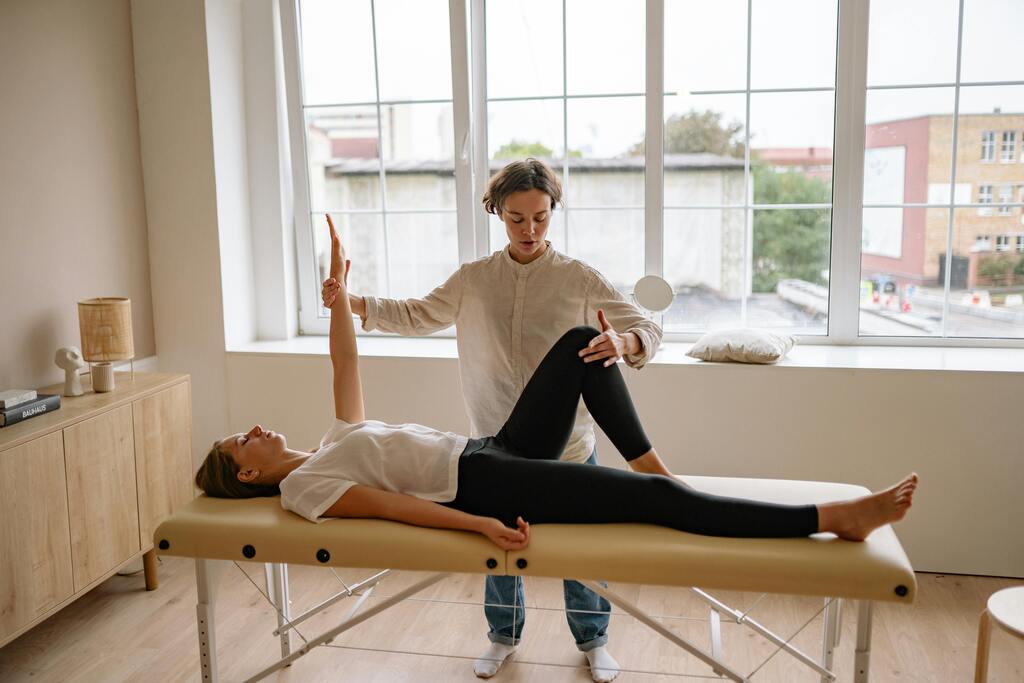
If you live with recurring back pain, abdominal discomfort, or a shoulder that never quite moves freely, you may have come across visceral manipulation and wondered what it actually involves. It is one of the less familiar services I offer at Painless Stride in Broomfield, so I want to explain it plainly: what it is, what a session looks like in my practice, why people ask about it, and what current research can and cannot tell us.
What is Visceral Manipulation?
Visceral manipulation is a gentle manual therapy that focuses on the organs of the abdomen and chest and the connective tissue that holds them in place. "Visceral" simply refers to the internal organs. I trained in this approach through the Barral Institute, which describes it as gentle mobilization of the fascia around specific organs.
The thinking behind it is straightforward. Your organs move as you breathe and change position, and they are connected by fascia and ligaments to the spine, ribs, diaphragm, and pelvis. Practitioners use light, precise touch to assess how these tissues move and to encourage easier movement where tissue feels restricted. Because these connections are extensive, the area I work on is not always the place where you feel discomfort.
This is the working model behind the method. Research has not confirmed it, and I share it so you understand the reasoning, not as proof of how the work functions.
Why people ask about it
In my practice, people most often ask about visceral manipulation when they are dealing with:
- Abdominal pain or discomfort
- Recurring or chronic back pain
- Reduced spinal mobility
- Shoulder pain or limited shoulder range of motion
- Slow digestion
- Acid reflux
The Barral Institute also lists concerns such as neck pain after whiplash, discomfort related to surgery or scar tissue, chronic pelvic pain, headaches, bloating, and constipation.
These lists describe why people seek the work. They are not evidence that it will help a particular condition, and several of these symptoms deserve a medical evaluation first, which I cover below.
What a session looks like at Painless Stride
Every session begins with a conversation. On your first visit, that is a full intake about your history, your symptoms, and what you would like to be able to do. On later visits, we recap what has happened since your last session.
Next, I complete a physical assessment. I test your range of motion and do a pain assessment so we have a clear starting point.
From there, the session follows a simple rhythm: test, treat, and repeat. After treatment, I recheck the movements we tested so we can see together whether anything changed.
The visceral work itself usually takes about 30 minutes. I often combine it with other techniques to help your body adapt to the changes. When a session is devoted strictly to visceral work, I usually schedule visits three to four weeks apart and focus on what feels most restricted, typically one area and its attachments.
What to wear and how touch is handled
You remain partially clothed throughout the session, and comfortable, loose fitting clothing works best. I can work over your clothing or directly on the skin, depending on what feels right to you.
Abdominal touch can feel personal. Before I begin, I explain what I plan to do and ask for your permission. You are always welcome to ask questions, ask me to adjust pressure, or stop at any time.
What the assessment is, and what it is not
What I feel during an assessment is information about how tissues move. It is not a medical diagnosis of an organ, and visceral manipulation does not replace medical testing or treatment.
What does the research say?
Research on visceral manipulation is limited, and I want to be honest about that. It is worth coming to a complimentary consultation to see if it works for you.
- A broader look across conditions: A 2023 systematic review of 11 randomized trials, with 490 participants in total, covered conditions such as irritable bowel syndrome, reflux, and low back pain. Some individual trials reported positive results, but the authors concluded that strong evidence is lacking. Many of the trials were small.
- Low back pain: In a 2015 trial of 64 adults with low back pain, adding visceral manipulation to standard physiotherapy did not change pain at six weeks compared with a placebo version of the technique. At one year, the visceral manipulation group reported less pain. That was a secondary finding and needs confirmation.
- Reflux: A 2019 trial of 60 adults with reflux found that an osteopathic technique aimed at the junction of the esophagus and stomach improved reflux symptom scores one week later, compared with a sham technique. The study was small and did not follow people beyond that short window.
When to see a medical provider first
Please contact your physician before booking, or seek urgent care when appropriate, if you have:
- Sudden, severe, or worsening abdominal pain
- Abdominal pain with fever, vomiting, or blood in your stool or vomit
- Difficulty or pain when swallowing
- Unexplained weight loss
- Reflux or heartburn that continues despite treatment
- Back pain with numbness, weakness, or changes in bladder or bowel control
- Any new symptom that concerns you
If you are pregnant, recovering from recent surgery, or managing a medical condition, please tell me during your intake so we can decide together whether this work is appropriate.
Frequently asked questions
Does visceral manipulation hurt?
The pressure is light and precise. Some areas may feel tender, and you can ask me to adjust or stop at any time.
Is it the same as massage?
No. Massage generally works with muscles and other soft tissue. Visceral manipulation uses gentle, specific touch around the organs and their connective tissue. I may combine the two in one session.
How many sessions will I need?
There is no set number. We set goals together and recheck your movement and symptoms at each visit, which helps us decide whether to continue, adjust, pause, or explore other options.
Can I book visceral manipulation on its own?
Yes. You can book it as its own session, or it can be part of a broader bodywork session.
Does it diagnose organ problems?
No. Only a medical provider can diagnose an organ condition.
Is visceral manipulation a good fit for you?
The best way to find out is to talk it through. I offer a complimentary consultation of about 45 minutes. We complete your intake together, and you receive some bodywork so you can feel the approach for yourself before deciding on anything.
Request your complimentary consultation or schedule online.
This article is for general education and is not medical advice.
Sources
- Guillaud A, Darbois N, Monvoisin R, Pinsault N. Reliability of diagnosis and clinical efficacy of visceral osteopathy: a systematic review. BMC Complementary and Alternative Medicine. 2018;18:65.
- da Silva FC, Vieira LS, Santos LV, et al. Effectiveness of visceral fascial therapy targeting visceral dysfunctions outcome: systematic review of randomized controlled trials. BMC Complementary Medicine and Therapies. 2023;23:274.
- Panagopoulos J, Hancock MJ, Ferreira P, Hush J, Petocz P. Does the addition of visceral manipulation alter outcomes for patients with low back pain? A randomized placebo controlled trial. European Journal of Pain. 2015;19(7).
- Eguaras N, et al. Effects of osteopathic visceral treatment in patients with gastroesophageal reflux: a randomized controlled trial. Journal of Clinical Medicine. 2019;8(10):1738.
- Barral Institute. Therapeutic value of visceral manipulation.